Rajat Jain
Founder · 2 June 2026
Learn how Section 80G helps you save income tax by donating to NGOs in India. Step-by-step guide with deduction limits, eligible funds, Form 10BE & examples.
# How to Save Tax by Donating to NGOs in India: The Complete Section 80G Guide (2026)
What if your next tax-saving investment didn't just reduce your tax bill — but also fed a hungry child, rescued a stray animal, or put a girl through school? Section 80G of the Income Tax Act makes that possible.If you are a salaried professional, freelancer, or business owner in India looking for smart ways to reduce your taxable income, donating to a registered NGO is one of the most fulfilling and financially rewarding strategies available to you. Under Section 80G of the Income Tax Act, 1961, your charitable donations can earn you a tax deduction of up to 100% of the donated amount.
This guide breaks down everything you need to know — the law, the limits, the categories, the documentation, and the exact steps to claim your deduction when filing your ITR — so you can save tax and save lives, simultaneously.
What Is Section 80G of the Income Tax Act?
Section 80G is a provision under the Income Tax Act, 1961, that allows Indian taxpayers to claim a deduction from their taxable income for donations made to certain approved charitable institutions, trusts, and government relief funds.
In simple terms: when you donate money to a registered NGO, the government rewards you by reducing your tax liability.
The deduction amount depends on two factors:
1. The category of the organisation you donate to (some qualify for 100% deduction, others for 50%)
2. Whether a qualifying limit applies (some deductions are capped at 10% of your Adjusted Gross Total Income)
Important: Section 80G deductions are available only under the Old Tax Regime. If you have opted for the New Tax Regime (Section 115BAC), you cannot claim 80G deductions. However, for many taxpayers with significant deductions, the Old Regime often results in lower overall tax — making 80G a powerful tool in your tax-planning arsenal.
The 4 Categories of Section 80G Deductions (Explained Simply)
Not all donations are treated equally under Section 80G. The Income Tax Act classifies eligible donations into four distinct categories, each with its own deduction rate and qualifying limit:
Category 1: 100% Deduction — No Qualifying Limit
These are donations to specific government funds where you get a full 100% deduction with absolutely no upper cap.
Eligible funds include:- Prime Minister's National Relief Fund (PMNRF)
- PM CARES Fund
- National Defence Fund
- National Foundation for Communal Harmony
- National Children's Fund
- Clean Ganga Fund
- Swachh Bharat Kosh
- National/State Blood Transfusion Council
- Army Central Welfare Fund, Indian Naval Benevolent Fund, Air Force Central Welfare Fund
- Chief Minister's Relief Fund or Lieutenant Governor's Relief Fund
- Fund set up by a State Government for medical relief to the poor
Category 2: 50% Deduction — No Qualifying Limit
Donations to certain institutions where you get a 50% deduction with no upper cap.
Eligible institutions include:- Jawaharlal Nehru Memorial Fund
- Indira Gandhi Memorial Trust
- Rajiv Gandhi Foundation
Category 3: 100% Deduction — Subject to 10% Qualifying Limit
Donations to approved institutions where you get a 100% deduction, but the total eligible amount is capped at 10% of your Adjusted Gross Total Income (AGTI).
Eligible institutions include:- Local authorities or associations approved by the government for promoting family planning
- Approved educational institutions of national eminence
Category 4: 50% Deduction — Subject to 10% Qualifying Limit
This is the most common category and applies to most registered NGOs, trusts, and charitable organisations in India — including Kindness Welfare Association.
You get a 50% deduction, and the total eligible donation amount is capped at 10% of your Adjusted Gross Total Income (AGTI).
This is the category that applies when you donate to your local food donation NGO, animal rescue charity, education trust, or community welfare organisation.How to Calculate Your 80G Deduction: A Step-by-Step Example
Let us walk through a real-world calculation so you can see exactly how much tax you would save by donating.
Scenario:
- Your Gross Total Income: ₹12,00,000 per year
- Section 80C Deductions (PF, LIC, etc.): ₹1,50,000
- Donation to Kindness Welfare Association: ₹1,00,000
Step 1: Calculate Your Adjusted Gross Total Income (AGTI)
AGTI = Gross Total Income − Other Chapter VI-A Deductions (excluding 80G)
AGTI = ₹12,00,000 − ₹1,50,000 = ₹10,50,000Step 2: Calculate the 10% Qualifying Limit
Qualifying Limit = 10% of AGTI
Qualifying Limit = 10% × ₹10,50,000 = ₹1,05,000Step 3: Determine the Qualifying Amount
The qualifying amount is the lower of:
- Actual donation: ₹1,00,000
- Qualifying limit: ₹1,05,000
Step 4: Apply the 50% Deduction Rate
Final Deduction = 50% × Qualifying Amount
Final Deduction = 50% × ₹1,00,000 = ₹50,000Result:
Your taxable income is reduced by ₹50,000. If you fall in the 30% tax bracket (Old Regime), this saves you approximately ₹15,600 in taxes (₹50,000 × 30% + 4% cess).
In other words: Your ₹1,00,000 donation to feed the hungry effectively cost you only ₹84,400 after the tax benefit — and 100% of the donated amount went directly to feeding people in need.Mandatory Documentation: Form 10BE and Form 10BD
Starting from AY 2022–23, the Income Tax Department introduced stricter documentation requirements to prevent fraudulent 80G claims. Here is what you need to know:
What is Form 10BD?
Form 10BD is a Statement of Donations that every 80G-registered NGO is legally required to file with the Income Tax Department. It contains a detailed list of all donations received during the financial year, including:
- Donor's name, PAN, and address
- Amount donated
- Mode of payment
- Date of donation
What is Form 10BE?
Form 10BE is the official Certificate of Donation that is generated by the Income Tax portal after the NGO files Form 10BD. Think of it as your official receipt from the government — not just from the NGO.
Why Does This Matter to You?
When you file your ITR and claim an 80G deduction, the Income Tax Department automatically cross-verifies your claim against the data reported by the NGO in Form 10BD. If there is a mismatch — even a small one — your deduction may be rejected, or you may receive a notice.
This is why it is critical to donate to a well-managed, compliant NGO that files Form 10BD on time.How to Get Your Form 10BE:
1. The NGO must issue Form 10BE to you by 31st May of the financial year following the donation (e.g., for FY 2025–26 donations, by 31st May 2026)
2. If you have not received it, contact the NGO directly and request them to provide the certificate downloaded from the Income Tax e-filing portal
3. Keep this document safely alongside your donation receipts as supporting evidence
Kindness Welfare Association is fully compliant with Form 10BD filing requirements. Every donor who contributes through our platform receives an instant 80G donation receipt via email, and we issue Form 10BE certificates within the statutory deadline.
Critical Rules You Must Follow (Don't Get Your Deduction Rejected)
Rule 1: Old Tax Regime Only
Section 80G deductions are not available under the New Tax Regime (Section 115BAC). If you want to claim 80G, you must file under the Old Tax Regime.
Pro tip: If your total deductions (80C + 80D + 80G + HRA + others) exceed approximately ₹3.75 lakh, the Old Tax Regime is often more tax-efficient than the New Regime. Run both calculations before filing.Rule 2: Cash Donations Cannot Exceed ₹2,000
If you make a cash donation, the maximum eligible amount for 80G deduction is ₹2,000 per transaction. Any cash donation above ₹2,000 is completely ineligible.
Solution: Always donate via UPI, net banking, debit card, credit card, NEFT, RTGS, or cheque. Digital donations have no upper limit for 80G eligibility.Rule 3: Only Monetary Donations Qualify
Donations of food, clothes, medicines, or any other material goods — no matter how valuable — do not qualify for Section 80G deduction. Only monetary (money) donations are eligible.
This is exactly why sponsoring meals through an NGO is better than donating raw food. When you donate ₹5,000 to Kindness Welfare to sponsor a food distribution drive, you receive a valid 80G receipt. If you donate ₹5,000 worth of raw rice directly, you receive nothing.Rule 4: Verify the NGO's 80G Registration
Before donating, always verify that the NGO holds a valid and active 80G registration certificate. The certificate should display:
- The NGO's legal name
- PAN number
- 80G registration number
- Validity period (ensure it has not expired)
Rule 5: Provide Transaction Details When Filing ITR
Since AY 2026–27, the ITR form requires you to provide:
- Transaction reference number (UPI reference ID, cheque number, or NEFT/RTGS reference)
- IFSC code of the NGO's bank branch
- PAN of the donee organisation
- 80G registration number of the donee
Keep your bank statements handy when filing.
How to Claim 80G Deduction in Your ITR (Step-by-Step)
Here is the exact process to claim your deduction when filing your Income Tax Return:
Step 1: Choose the Old Tax Regime when filing your ITR (ITR-1, ITR-2, or ITR-3) Step 2: Navigate to "Deductions under Chapter VI-A" section Step 3: Locate "Schedule 80G" and click to expand it Step 4: Select the correct category for your donation:- Section A: 100% deduction, no limit
- Section B: 50% deduction, no limit
- Section C: 100% deduction, with qualifying limit
- Section D: 50% deduction, with qualifying limit (most NGOs fall here)
- Name of the donee (NGO name)
- Address of the donee
- PAN of the donee
- 80G registration number
- Amount donated
- Mode of payment (cash/cheque/electronic)
- Transaction reference number
- Bank IFSC code of the donee
Why Donating to Kindness Welfare Association Is the Smartest Tax-Saving Decision
There are thousands of 80G-registered NGOs in India. Here is why Kindness Welfare Association stands out as the ideal choice for tax-saving donations:
| Feature | Kindness Welfare | Typical NGOs |
|---|---|---|
| 80G Registration | ✅ Active and verified | ⚠️ May have expired |
| 12A Registration | ✅ Yes | ⚠️ Not always |
| NGO Darpan (NITI Aayog) | ✅ Government-recognized | ❌ Often not registered |
| Instant Digital Receipt | ✅ Automated via Razorpay | ⚠️ Manual, delayed |
| Form 10BD Filing | ✅ Filed within statutory deadline | ❌ Often missed |
| Form 10BE Certificate | ✅ Issued to all donors | ⚠️ Only on request |
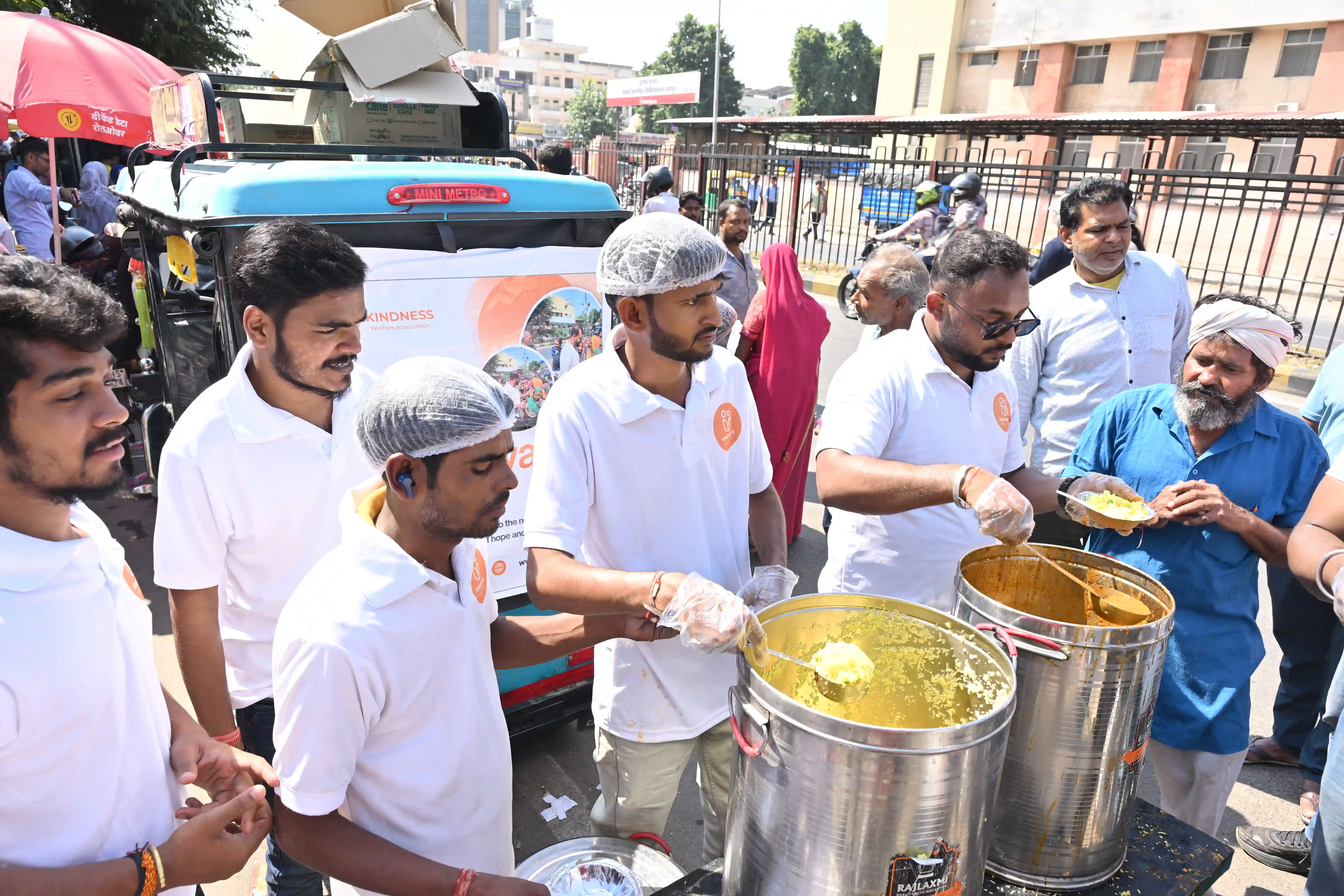
| Daily Operations | ✅ 500+ meals served daily | ❌ Occasional drives |
| Transparency | ✅ Daily Instagram Reels of every seva | ❌ Annual PDF reports |
| Impact | ✅ 125,000+ meals served | — |
Your Donation's Direct Impact:
- ₹500 feeds 10 people a complete, freshly cooked meal
- ₹5,000 sponsors an entire day's food distribution drive for 100 people
- ₹10,000 feeds 200+ people and you receive a personalized impact report
- ₹50,000 sponsors a week of Daily Food Seva for an entire community
Every single rupee is tracked, documented, and verifiable.
Frequently Asked Questions About Section 80G
Can I claim 80G deduction under the New Tax Regime?
No. Section 80G deductions are only available under the Old Tax Regime. If you have opted for the New Tax Regime (Section 115BAC), you cannot claim any deduction for charitable donations. However, you can switch between regimes each year (for salaried individuals) or at the time of filing (for business income), so plan accordingly.
How much tax can I save by donating to an NGO?
The exact savings depend on your income bracket and the donation category. For most NGO donations (50% deduction, with qualifying limit), a person in the 30% tax bracket who donates ₹1,00,000 can save approximately ₹15,600 in taxes (including cess). The effective cost of the donation becomes ₹84,400 instead of ₹1,00,000.
Is there a maximum limit on how much I can donate under 80G?
There is no limit on how much you can donate. However, for most NGOs, the deductible amount is capped at 10% of your Adjusted Gross Total Income. For example, if your AGTI is ₹10,00,000, the maximum qualifying donation amount is ₹1,00,000. Donations to specific government funds (like PMNRF or PM CARES) have no qualifying limit.
Can I donate cash and claim 80G?
Yes, but only up to ₹2,000 per donation. Any cash donation exceeding ₹2,000 is not eligible for 80G deduction. To claim the full benefit, always donate via UPI, net banking, cheque, or card.
What documents do I need to claim 80G deduction?
You need: (1) The NGO's donation receipt containing their name, PAN, and 80G registration number, (2) Form 10BE — the official Certificate of Donation issued by the NGO after they file Form 10BD with the Income Tax Department, and (3) Your bank statement showing the transaction reference number and the donee's bank IFSC code.
Can I donate food or clothes and claim 80G?
No. Only monetary donations (money transferred via any mode) are eligible for Section 80G deduction. Donations in kind — including food, clothes, medicines, or equipment — do not qualify, regardless of their value. This is why sponsoring meals through an NGO like Kindness Welfare (which gives you a monetary receipt) is better than donating raw food directly.
What is Form 10BE and how do I get it?
Form 10BE is the official Certificate of Donation generated by the Income Tax e-filing portal after the NGO files Form 10BD (Statement of Donations). The NGO is legally required to issue this certificate to you by 31st May of the year following the donation. If you have not received it, contact the NGO directly.
Is Kindness Welfare Association 80G registered?
Yes. Kindness Welfare Association is a government-recognized NGO in Jaipur, Rajasthan, with active 80G, 12A, and NGO Darpan (NITI Aayog) registrations. Every donation made through our website receives an instant digital receipt, and we issue Form 10BE certificates to all donors within the statutory deadline.
The Bottom Line: Save Tax, Save Lives
Tax planning does not have to be a purely financial exercise. Section 80G gives you a rare opportunity to align your financial goals with your values — reducing your tax bill while directly contributing to feeding the hungry, rescuing animals, and uplifting communities.
Every year, between January and March, thousands of Indians scramble to find last-minute tax-saving instruments. Most end up buying insurance policies they do not need or locking money in fixed deposits that barely beat inflation. Meanwhile, a single donation to a trusted NGO like Kindness Welfare can:
1. Save you up to ₹15,600 on a ₹1,00,000 donation (30% bracket)
2. Feed 2,000 people with that same ₹1,00,000
3. Give you an instant 80G receipt for hassle-free ITR filing
4. Create documented, verifiable impact that you can see in real-time on our Instagram
The choice is simple. This tax season, make your money work twice — once for your wallet, and once for someone who has nothing.
👉 Donate Now and Get Your 80G Receipt Instantly
Published by Kindness Welfare Association, Jaipur — A government-recognized (12A, 80G, NGO Darpan) food donation NGO in Rajasthan serving 500+ freshly cooked meals daily. 125,000+ meals served and counting.